Thursday, 28 February 2013

My Magazine

After looking at a range of different genres I have decided to make a Brass Band Magazine.
I have decided on this genre because I play in a brass band and so know a lot about it.
Although I played a brass instrument for a long time before joining a brass band I didn't really know very much about them when I joined. Now that I am involved I know a lot more about it but my parents and family still don't.
For this reason I would like to make a magazine that informs people, not particularly involved, about what goes on in the 'brass banding' world.
Due to the subjects I will be discussing the age group I will target will most likely be 30+.

To achieve this informative feel my main article will be about Youth Brass 2000 who are in the midst of a winning streak. My front cover will picture an image of two of the bands best soloists who won awards at the band's most recent competition. I hope that by showing two of the band's best players on the front cover, my target demographic will be encouraged to pick up my magazine and learn more about the 'brass banding' world.

My magazine will be primarily focused on the age and life style of my chosen demographic.
Although I will aim to make my magazine as inclusive as possible it is likely that the life style of my target audience will place them into socio economic group B. Also the fact it is a magazine will be more appealing to the female gender, but that doesn't I will aim it totally at the female gender.
Ethnically I believe that my magazine will be inclusive to everyone because I will be discussing brass bands as a whole and they don't discriminate against people of other ethnicities. The band I will feature in my main article has a mixture of ethnicities hopefully meaning I will appeal to all ethnic groups.

This is an example of my typical reader:


As one of my readers she may have a child or relative in a brass band, have played in a brass band when she was younger, play a brass instrument herself or just be interested in brass bands. My magazine will provide her with information about the best bands, upcoming concerts or competitions and results from the latest competitions.

From this image she is most likely a mother just about to rush out of the door to take her kids to their next class. She hasn't yet had time to do the washing up and is poised next to the sink to put her mug in when she finishes her tea. She also has her hand bag next to her ready to pick up and leave when she is ready.

From the way she is dressed you can see that she fits into socio-economic group B. She most likely has a job as a teacher or something in an office, something at the level of intermediate managerial.

As a mother she will probably spend most of her spare time taking her children to the clubs they participate in and the rest of her time working. Sometimes she might go to the cinema or go out for a meal or cup of tea with her friends but this may only be in the spare minute she has between everything else.

The television she watches will probably be period dramas, detective/murder mysteries and the occasional comedy or chat show.

Her favourite novels are detective/murder mysteries and some classic romance novels.

As a woman in socio-economic group B her job and family commitments mean that she is likely to only holiday during school holidays. Due to the limited periods of time available for her to go on holiday she is more likely to holiday in England with a trip abroad every other year or so.

Since my typical reader has quite a busy schedule they probably won't have a lot of time for reading magazines. To make my magazine appealing I will have to ensure that the masthead, main image and main headline stand out from other magazines so that it will catch their eye and make them want to read it.
Target Demographics

Over the past week I have been looking closely at Q Magazine and its content to decide on its target demographic. After reading an issue with the cover story 'Bowie Lives! Why we all live in David's world now' I have come to the conclusion that their target demographic are people aged 16+. From this issue it appears that the main genre Q magazine talks about is rock, but all types of rock from glam-rock to the more current rock-pop.

When choosing the target demographic for my magazine there will be several factors to consider.

S - socio-economic grouping - A, B, C1, C2, D, E
A - age
G - gender
E - ethnicity
L - life style - hobbies, aspirations, interests etc.

Hypodermic Needle Effect/ Magic Bullet Theory

The 'Hypodermic Needle Effect' is the idea that the media, particularly mass media, have the ability to 'inject' a message into their audiences minds. For it to work it has to assume that the audience are passive receivers of the message and that they will accept and not challenge what they are told.


Two of the most famous examples of the Hypodermic Needle Effect are:
  • The american release of War of the Worlds. 
  • The Sun's political campaign to ensure the Conservatives won the vote. 
When 'War of the Worlds' was first released in America it was broadcast by radio. The way it was portrayed caused a country wide panic with people believing that Martians really were coming to earth. Although unintentional this is an example of how powerful the media can be. What started as an innocent broadcast ended in mass confusion because people believed what they heard on the radio. 

The Sun's campaign is a more serious example. The campaign stemmed from Rupert Murdoch's hate of the printing unions after they refused to print the main headline and image on a report the Sun did on Arthur Scargill hours before it was to be printed. Instead the Sun was forced to print and apologetic message explaining why there was no cover story for this issue.


Rupert Murdoch was tired of the printing unions being able to tell him what he could and couldn't print so in the run up to the 1992 election, when everyone expected the Labour party to beat the Conservatives, the Sun launched a campaign backing the Conservatives because they intended to crush the unions. The Sun engineered their articles to appeal to a demographic who would back them in their efforts and after the Conservatives won the election they published an article headlined 'It was The Sun Wot Won It.'

The Sun believed that they had won the election for the Conservatives because of the campaign they had been running and it is likely that this is true. This is why it is a good example of the hypodermic needle effect. The Sun had been constantly backing Conservative initiatives and so people began to think of the Conservatives as the best party meaning they voted for them on election day.

It is in situations like the Sun's Conservative campaign, where one person has the power to decide the next prime minister, that make you think about how much power some people have over the rest of the country.

In one of the Spider Man films the line 'With great power comes great responsibility' was said. In our media lesson we discussed the people in Britain that have power and responsibility.

People with power and responsibility:

  • The Queen - The Royal family
  • The Prime Minister - the government
  • Mayors
  • Local Councils
  • The Authorities - Police, Doctors, Surgeons etc. 
  • Teachers
  • Media - BBC, ITV etc. Newspapers, Music industry etc. 

As the creator of a new music magazine I will have a responsibility to report truthfully to my readers, issues with in my chosen genre but I will have the power to influence their favourite artists with in that genre. Whilst producing my magazine it will be my duty to not abuse this power and responsibility to ensure that my readers are kept happy.

Uses and Gratifications Theory

The uses and gratifications theory is the opposite of the Hypodermic Needle Effect. It works on the idea that people are active receivers of the message; they will use what they see to gratify certain needs.

e.g. the need for:

  • diversion
  • information
  • advice etc. 

Wednesday, 27 February 2013


 Circulation


I have been investigating magazine circulation so that I can choose to make a magazine that will do well within a competitive market and this is what I have found:

Trends in Sales

I have noticed several trends in magazine sales whilst looking at the circulation figures for the start of 2012.

Most noticeable was which magazines are the best sellers. The list starts with Television magazines which you could argue is obvious since most people watch TV and the next best sellers are gossip magazines like 'Take a Break'. This indicates the public's need for gossip and their want to look like the celebrities they aspire towards. The middle of the list consists of more programme specific magazines like 'Top Gear magazine' and life style magazines such as 'Good homes.' The end of the list contains magazines aimed at a more niche audiences such as children's magazines, parenting magazines and area specific magazines.

However, even though TV magazines seem to be the best sellers most of them have lost readers in the past few years. A similar drop can be seen in the circulation of most of the magazines on the list. Very few magazines have increased in circulation and it is mainly the magazines with niche demographics who's circulation hasn't changed.

One of the most likely reasons for the drop in magazine circulation is the global recession that has begun in the past few years. Large amounts of people have been hit by the recession and everyone has had to make cuts. In some cases this will have meant stopping a monthly subscription to a particular magazine seeing a drop in circulation. This theory is supported by the fact that the most widely circulated magazines are ASDA and Tesco's free magazines and 'Eat In' magazine's circulation has increased by 52.7% because people don't have enough money to eat out.


Niche Magazines
From my research I found that a lot of the magazines aimed at niche audiences haven't lost readers or gained readers. The most noticeable examples are children's magazines like 'Moshi Monsters' or 'Octonauts' so I have de-constructed a cover for one of these magazines to see what conventions they use to secure their readers each issue.

  • As this is aimed at Children there are a lot of bright colours to draw them in and catch their attention. 
  • They clearly advertise free gifts so that children will want to buy the magazine purely for the gift.
  • The web adress is clearly visible at the bottom so that the fans can go and investigate the website once they have bought the magazine. 
  • The fact they have been on television is clearly advertised at the top of the front cover so children will want to buy it because they have seen them on television. 
  • Cartoon moshi monsters are displayed on the front that appeal to both male and female moshi fans by having the right mix of weird and cuddly. 
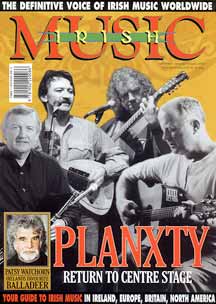
In the instance of magazines like Moshi monsters magazine they don't particularly gain new readers because of the way they built up their fan base. When the magazine first started out it's gifts were collectable toys and one way of collecting them was by buying the magazine so they established a solid fan base quite quickly. However a niche music magazine such as 'Irish Music' magazine, which specialises in Celtic and Irish music, may choose to build on its current fan base to spread the word about the style of music it is promoting but it may choose not to because it doesn't want to loose the fan base it already has. 
 
For these reasons I think I will choose a genre of magazine that has a niche audience so that I can secure a fan base quickly. This will in turn make it easier for me to engineer my content around my audiences needs.


Wednesday, 20 February 2013

History of Music Magazines


Brief History
  • Kerrang was first published as a one off supplement in 'Sounds' newspaper. 
  • In 1987 it became a weekly. 
  • In the early 2000s it became a best selling magazine. 
  • Its name derives from the sound an electric guitar makes when it is playing a power chord.

Typical content:
  • Kerrang tends to focus on more alternative genres and over the time of its production it has covered styles such as glam rock, grunge and metalcore. 
  • It tends to feature articles on bands from the genre it is focusing on and news about upcoming concerts or tours. 

Typical readers:

The typical readers of Kerrang are people interested in the genres discussed who are usually aged between 15 +.

House style: 
  • The same font is always used for the masthead and the title is usually black. 
  • There is always a large photo and it tends to be positioned over the top of the mast head. 
  • Information about what is in the article is usually positioned at the bottom of the magazine and the title of the main article/band is positioned in the centre of the page. 
  • There are usually some other smaller images positioned around the magazine to accompany other things talked about inside the magazine. 
Producer: James McMahon

Publisher/Distributor: Bauer Media Group


Brief history:

  • Q magazine was first published in 1986 and it was unlike other music magazines at the time
  • It was originally called 'Cue' magazine but changed its name when it was thought it would get confused with a snooker magazine


Typical content:

  • Reviews of concerts, albums, new releases etc.
  • Interviews with popular artists
  • The '100 greatest' feature which is a list of what they consider '100 greatest songs' etc


Typical readers:

  • Fans of popular music
  • 'Mainstream' artist fans
  • 14 +


House style:
  • Large Q in a big red box in the top left hand corner
  • Large main image taking up a large portion of the cover
  • The title of the article featuring the person on the cover is much larger that any of the other writing
  • Has information about what else is in the magazine down the side


Producer: Dan Carey

Publisher/Distributor: Bauer Media Group


What I think makes a good magazine?

For me a good music magazine has:
  • A large main image that supports the main article
  • A good headline for their main article that gives enough information to draw the reader in without giving too much away
  • Has information about other articles/features in the magazine
  • Has one or two accompanying images on the cover of the magazine to support the other article talked about
  • Sticks to a 'three colour' colour scheme
  • Sticks to the rule of thirds
In my magazine I hope to comply with what I think makes a good magazine.

During my research I have seen a range of good and bad magazine covers and also some alternative ones.

My favourite designs are the more conventional ones such as on the cover of vibe and Q because I think they look the most professional. I also think that producing a cover in this style would be more effective for marketing because it is the style that is most widely purchased.


Ray Gun Magazine


  • The black and white colour scheme looks sophisticated and old fashioned
  • The masthead looks like its fading
  • The band/artist featured inside's name is clear
  • The barcode has become part of the design and it blends in with the colour scheme/background


  • The upside down image makes it look like the person featured is a vampire
  • The masthead is clearly readable
  • The edge of the writing is cut off slightly
  • The colour scheme is black and white which is very simple and basic but effective
  • The image defies the rule of thirds


I like these on their own but I don't think it is right for a magazine front cover. 

Tuesday, 19 February 2013

Two genres of music I am considering putting in my magazine that I already know quite a lot about are:

Pop - Information about music in the charts, the latest bands, your favourite artists etc.

Example of existing magazine:


  • Image covers the masthead
  • The main image is the biggest focus because that's what will draw readers in
  • Sell lines don't cover the main image
  • Centres around three colours, blue, pink, black
What is the effect:

  • The fact that Kanye West is making direct eye contact with the reader and looks like he is serious or sulky could make the readers want to read the magazine because they think this look is attractive. 
  • The first part of the picture you look at are the eyes because they comply with the rule of thirds. The intensity of his gaze draws the reader in because it is as if he is looking at them. 
  • The tilt of his head makes it seem cooler because he is standing as if he doesn't really care or is slightly cocky. This also fits in with the idea that he 'is rap' as the sell line next to him suggests. 

Brass - Information on rising youth bands, the latest competition results, upcoming concerts etc. 

Example of existing magazine:


  • The main image is positioned behind the text
  • The sell lines and masthead are on top of the main image
  • The main headline is almost central so that the readers eye is drawn to it
  • The main colour scheme is black, white and brown
A genre of magazine that I don't know a lot about that would be interesting to produce would be:

Celtic/folk - The newest folk artist, upcoming tours/concerts etc. 


  • The main image is positioned behind the writing
  • There are very few sell lines
  • There is a lot of background/dead space
  • There is a web address written in large writing beneath the masthead 
  • There is a small accompanying image
  • The main colour scheme is red, green and yellow/gold
What is the effect:
The simple colour scheme shows the fresh feel of the music it is talking about

Research

One of the things I have learnt about research is that there are two sources, primary and secondary.
Primary research is research that you have done or found yourself, for example, an interview or questionnaire. 
Secondary research is research done by someone else that you can use, such as the information found on internet sites or in books. 

There are two types of primary and secondary research, qualitative and quantitative. 

Qualitative research is research done on a small scale like a interview or using an individual site and it deals with personal feelings, ideas or opinions. 
Quantitative research is research done on a wide scale using something like survey or a industry site.
This is more effective it you want to gather statistics or facts to do with what you are researching. 


When doing research for my magazine I will use a range of qualitative and quantitative primary and secondary research methods. For example:


The primary research methods I will use will be:


  • Focus groups - to learn more about what my target audience would like in a new music magazine. 
  • Surveys/questionnaires - to find out what genre of music would be best to feature in my magazine. 
  • Textual analysis - to find out what techniques existing magazines use to make their magazine appealing. 

The secondary research methods I will use will be:


  • Internet/search engines - to find popular magazines and what they contain etc. 
  • Copies of existing magazines - to see how they lay out their entire magazines to get ideas for my contents page and inside article. 


Monday, 18 February 2013

Wednesday, 6 February 2013

Final Magazine Cover


I am pleased with the final product because I think it looks quite professional. 

I am pleased with the uniformity of my colour scheme throughout with it being consistently red, white and black. 

I also think I have used the feedback I got from my focus group effectively. 

Whilst creating my magazine front cover I have made some changes from my draft design. For example, the student that I photographed was in year eight and so was wearing the wrong version of our school uniform. For this reason I had to change one of my original headline ideas to accommodate the change of year. 

Since creating my draft cover I have spoken to a focus group where I asked a selection of year seven students what they wanted in a school magazine:

Would you be interested in a puzzle/competition page?
Would probably only do the puzzles if bored
Would enter the competitions just to see if they could win

What colours would you like to see on a magazine front cover?
Bright colours like green, red and orange

What stories do you read first in an everyday magazine?
Embarrassing stories
Would you like embarrassing stories about teachers?
Yes

Would you read an article that told you about ways you could customise your planner?
Yes, because my planner is really boring

Is there anything else you think would be useful to have in a magazine?
Copy of the menus because I don't know what they are
One Direction

From these result I decided to add an exclusive head line where a teacher tells some of their embarrassing classroom moments. 

I also asked a teacher what they would like to see in a magazine:

What would you like to see in a magazine?
Term dates
Information about coming school trips, and photos of previous school trips. 
A department profile looking at a different subject each issue. 

They also said they think it would be more effective if published every half term.